|
H.M.S. SCARAB ‘A Lucky Little Ship’ 1939
– 1940 Original
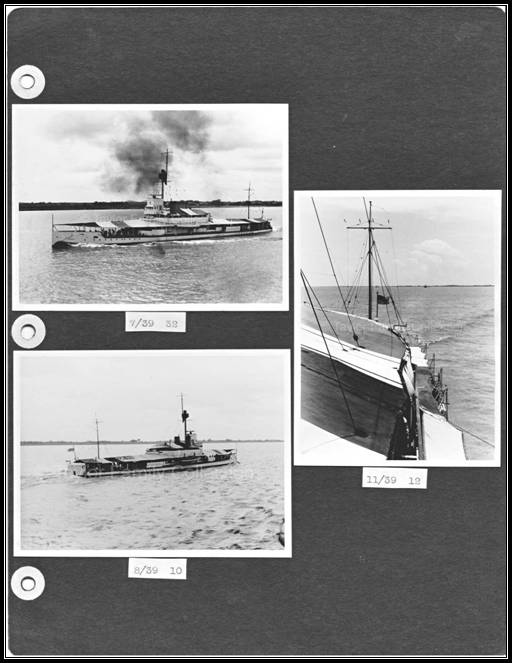
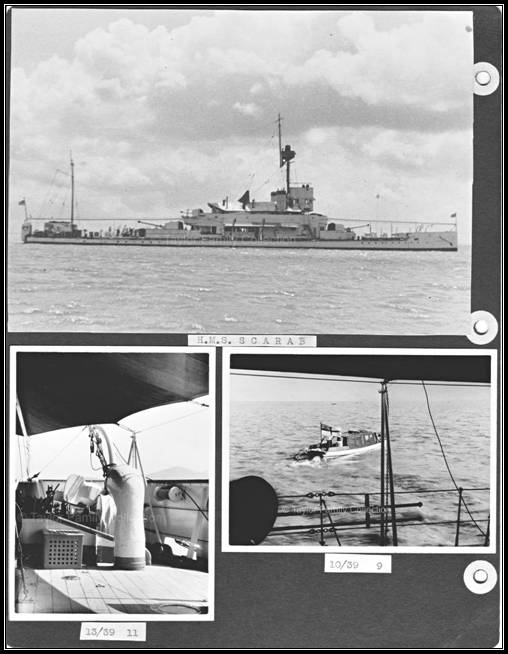
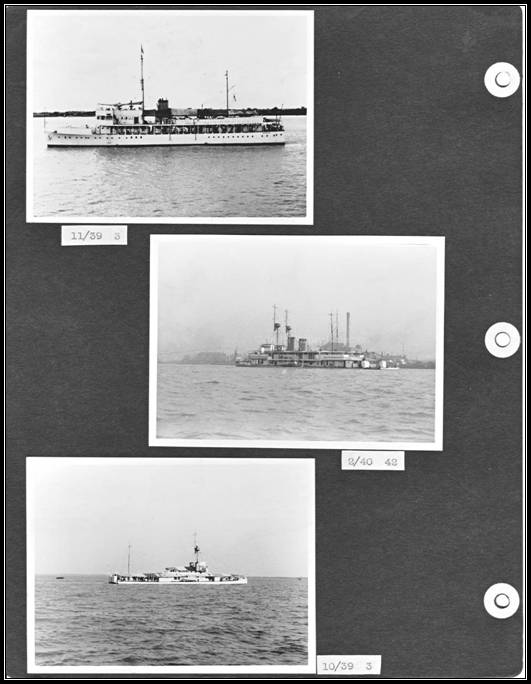
1939/40 photos of HMS Scarab’s refit and at sea trials. This
is a unique vintage collection of original photos belonging to the Royal Navy
Officer in charge of the
refit at the time. From May 1939
through to early 1940 HMS Scarab was under refit at The photographs below are a unique pictorial record. It is thought that these were taken by the Officer in charge of the refit but to date no confirming details are available. It is possible that he is the officer photographed at the stern of Scarab in the following photo but we do not know for certain. For enlarged and reworked photos of the following please click on selected photo.
By 1938 the Admiralty had decided that the aging China Station Flotilla should be replaced by more up-to-date vessels. The first to be completed was HMS Scorpion, displacement 700 tons. She was designed to be the flagship, fitted out with the equipment, cabin and office accommodation appropriate to a busy admiral and was armed with two 4-inch guns, one 3.7 inch howitzer, two 3-pounders and ten smaller weapons. Her crew complement was 93. She became the new flagship on 22 December 1938 and was
scheduled to be joined in successive years by four new vessels; Dragonfly,
Grasshopper, Locust and Mosquito. All were 585 tons and similarly armed. They
were to take over from Cricket, Gnat, Mantis and Scarab but Locust and
Mosquito never reached By March 1939 Dragonfly and Grasshopper were almost ready
to leave
HMS Scorpion After the Munich Crisis in About this time the Commander-in-Chief, China proposed
that in the event that relations became strained between England and Germany
all the Yangtze gunboats should be withdrawn to Shanghai leaving one each at
Hankow, Wuhu, Nanking and below the Kiangyin Barrier, a few miles from
Woosung. Those assembled at Following their successes in In September 1939 the Admiralty ordered the withdrawal of
most of the gunboats from the Yangtze leaving one each at Hankow,
Nanking, in the delta and at Shanghai as proposed by the Commander-in-Chief
and four of the five vessels in the West River Flotilla were withdrawn to
Hong Kong. Only Seamew was left at The Commodore-in-Charge, Malaya had requested that seven
Insects be sent to In February 1940 Gnat and Cockchafer were withdrawn from
the Yangtze and sailed to
|